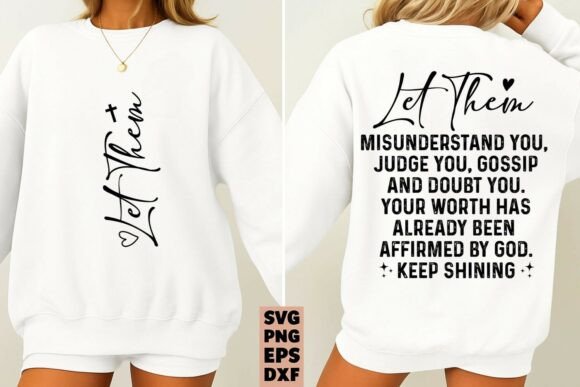
Let Them SVG: Christian Sleeve Design
A Designer’s First Glance—What This Design *Feels* Like Before the Needle Moves
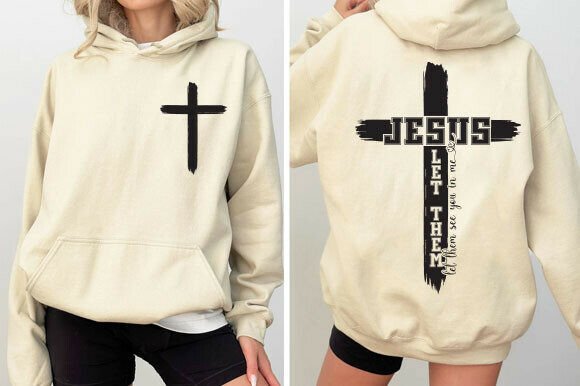
When I opened Let Them SVG, Christian Svg, Sleeve Svg, my first thought wasn’t “Oh, another faith-based motif”—it was “This has rhythm.” The layout leans into vertical flow, with balanced spacing between script and symbolic elements (a subtle cross motif integrated into the lettering, not tacked on). It’s not ornate, but it’s intentional: clean lines, moderate curve tension in the script, and just enough weight to hold up at 3.5–4 inches tall—the sweet spot for sleeve placement on a unisex sweatshirt or structured tote. It reads as reverent without being stiff, personal without being private. That matters—because this isn’t just decoration; it’s a quiet statement stitched onto something worn, carried, or gifted.
Real-World Test: Embroidering It on a Linen-Cotton Kitchen Towel for a Boutique Holiday Line
Last week, I prepped Let Them SVG, Christian Svg, Sleeve Svg for a small-batch holiday run: embroidered linen-cotton tea towels for a local gift shop. Why this design? Because it lands softly—not preachy, not generic. On the towel’s natural beige ground, the script read clearly at 3.75 inches, and the cross detail stayed legible without needing magnification. I used a medium-weight cutaway stabilizer and 40-weight polyester thread (navy on light fabric, cream on dark navy towels we added later). No puckering. No skipped stitches—even through the slight texture of the woven linen blend. That tells me the stitch density is well-managed: enough fill to define shape, but not so dense it fights the fabric. For a T-Shirt Designs category, that’s rare. Most sleeve scripts either collapse on thin knits or drown out delicate fabrics. This one breathes.
Where It Shines—and Where You’ll Want to Pause
- Custom apparel: Works beautifully on raglan sleeves, crewneck sweatshirts, and even lightweight denim jackets—especially when placed mid-bicep. The vertical proportion avoids awkward cropping on curved seams.
- Baby embroidery & nursery decor: Softens nicely on cotton onesies or muslin pillow covers. Just reduce to 2.5–3 inches and use gentle tear-away stabilizer—no harsh satin edges that irritate sensitive skin.
- Embroidered patch potential: Clean outer edge and minimal interior detail make it a strong candidate for iron-on or sew-on patches. No tiny interior loops to snag during cutting or stitching.
- Etsy seller advantage: It photographs well in natural light mockups—no glare-prone metallics or overly tight fills that muddy digital previews. Buyers instantly “get” the scale and tone.
Fabric & Fit Notes: Know Before You Hoop
This isn’t a one-size-fits-all machine embroidery design. Here’s where attention pays off:
- Thin or stretchy fabric? Add lightweight fusible stabilizer *under* the hoop—not just behind it. The script’s graceful curves can waver on jersey or slubbed voile without that extra support.
- Dark fabric? Test contrast early. The design relies on line clarity, not heavy fill—so a light thread (ecru, pale gray) may disappear on charcoal. Go one shade darker than you think you need.
- Caps or curved surfaces? Avoid placing the full design across the crown seam. It works best on the side panel or back strap—where the hoop sits flat and the lettering stays true.
- Frequent washing? Stick with polyester or rayon thread—not cotton floss. The satin stitch elements (especially the cross integration) hold better over time with synthetic fibers.
Why It Builds Trust—Not Just Aesthetics
Customers don’t buy embroidery—they buy intention. When someone chooses a handmade product with Let Them SVG, Christian Svg, Sleeve Svg stitched on a baby blanket or a teacher’s apron, they’re signaling care, belief, or quiet hope. That only lands if the execution feels considered—not rushed, not pixelated, not poorly digitized. This design delivers that professionalism: consistent stitch direction, smooth transitions between running and satin elements, and no “floaty” isolated letters that look like afterthoughts. For an Etsy seller or small shop product, that consistency builds repeat buyers. For a craft business, it elevates your portfolio without requiring custom digitizing.
Practical Designer Checks—Do These Before Your First Run
- Test the design on scrap fabric *identical* to your final product—same weave, same stretch, same dye lot if possible.
- Review the stitch path in your embroidery software: does the cross element stitch *after* the main script, or integrate smoothly? (Smooth integration = cleaner result.)
- Check small details at actual size: are the inner curves of the “e” or “g” open enough to avoid thread nesting?
- Run black-and-white mockups—this design’s strength is in contrast and form, not color complexity.
- Confirm licensing terms before listing finished items or bundling the file. Not all digital embroidery files permit commercial resale of stitched goods—verify before scaling.
- Use proper stabilizer for your fabric type—never skip this step, even for “simple” scripts. Under-stabilizing ruins more embroidery projects than bad thread choice.
The Bottom Line for Makers Who Value Real Results
Let Them SVG, Christian Svg, Sleeve Svg isn’t flashy—but it’s dependable. It fits naturally into thoughtful product lines: a boutique’s curated holiday collection, a church group’s personalized tote bag fundraiser, a new mom’s nursery set, or a small-batch apparel brand building quiet identity. It respects the craft—it doesn’t ask for shortcuts, but it doesn’t punish careful work either. As a working designer, I keep it in my go-to sleeve folder not because it’s trendy, but because it stitches cleanly, sells honestly, and feels human when worn. That’s the kind of machine embroidery design that earns repeat use—and earns respect.